

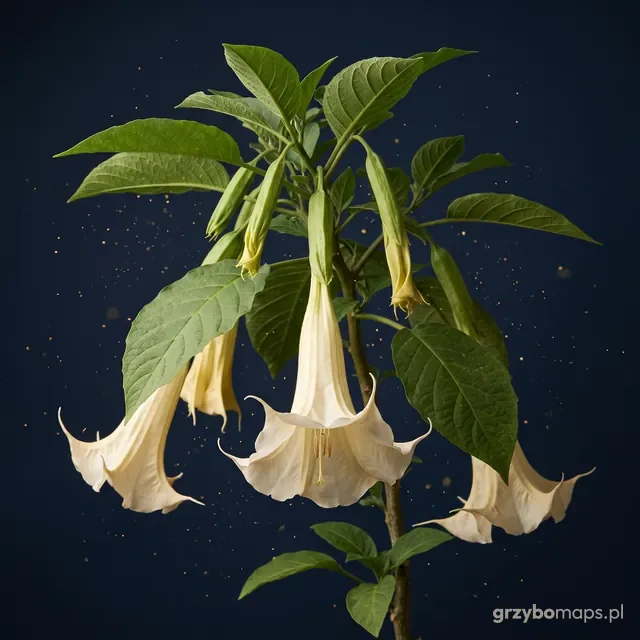
Brugmansia
Brugmansia spp.
Polish folk names: anielskie trąby, bieluń drzewiasty, floripondio, borrachero
What it looks like
A shrub or small tree 3–5 m tall, with large, oval, softly hairy leaves. The flowers are huge, up to 30–50 cm long, trumpet-shaped and hanging, white, yellow, pink or orange; they smell strongly in the evening. Thorn apples (Datura) have upward-facing flowers, while brugmansia's hang down.
Where it comes from
The Andes and tropical South America. All species are considered extinct in the wild: they survived only in cultivation, because people planted them near their homes, while the wild animals that spread their seeds probably disappeared. In Poland it is a popular pot and patio plant.
History
Peoples of the Andes and the Amazon have used brugmansia for centuries in divination and healing rituals. Shamans of the Sibundoy Valley in Colombia grew many varieties, each with its own name and purpose. According to Spanish chronicles, the Muisca gave it to the wives and slaves of a dead ruler before they were buried with him.
Legend and truth
In Colombia there is a story about "the devil's breath": criminals supposedly blow scopolamine powder (burundanga) into victims' faces, and the victim loses their will and hands over everything. Scopolamine really is sometimes used in crimes, usually slipped into a drink, but toxicologists consider the versions with blowing or touching a business card greatly exaggerated.
Substances
Tropane alkaloids: scopolamine and hyoscyamine (atropine), plus smaller amounts of others. They are present throughout the plant, and their content varies greatly with the specimen, season and plant part.
How it works
The alkaloids block acetylcholine receptors. They cause a dry mouth, dilated pupils, a racing heart, fever and delirium: the poisoned person sees people who aren't there and talks to them, can't tell them from reality, and afterwards usually remembers nothing. This is not a "trip", it is acute poisoning.
What it is sometimes confused with
- jimsonweed (Datura stramonium)
- downy thorn apple (Datura innoxia)
- other ornamental shrubs with trumpet-shaped flowers
Law in Poland
Brugmansia is a legal ornamental plant in Poland, sold in garden centres. Scopolamine and atropine are prescription medicines, and giving someone an intoxicating substance without their knowledge is a crime.
Fun fact
Brugmansia flowers smell strongest after dark, because in the wild they attract the night moths that pollinate them.
Frequently asked questions
How does brugmansia work?
The alkaloids block acetylcholine receptors. They cause a dry mouth, dilated pupils, a racing heart, fever and delirium: the poisoned person sees people who aren't there and talks to them, can't tell them from reality, and afterwards usually remembers nothing. This is not a "trip", it is acute poisoning.
What are the risks of brugmansia?
Poison. Poisoning can last several days and can be fatal because of heart rhythm problems, overheating or an accident while delirious. The alkaloid content is unpredictable. Leaf sap carried to the eye on the fingers dilates the pupil for many hours, which is sometimes mistaken for a stroke. Keep the plant away from children and animals, and if you suspect poisoning call 112.
Brugmansia and the law in Poland: what is allowed?
Brugmansia is a legal ornamental plant in Poland, sold in garden centres. Scopolamine and atropine are prescription medicines, and giving someone an intoxicating substance without their knowledge is a crime.