

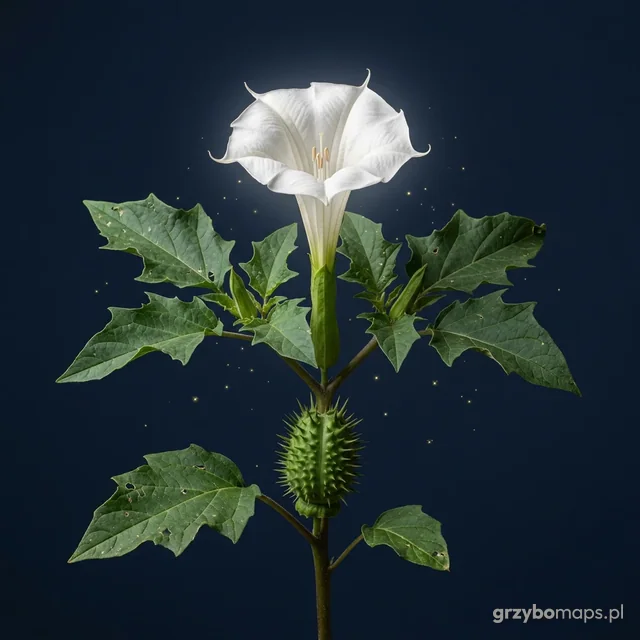
Jimsonweed
Datura stramonium
Polish folk names: durnopiec, dendera, pinderynda, trąbka diabła
What it looks like
An annual plant, usually about 1 m tall, with an unpleasant, “mousy” smell and large, toothed leaves. The flowers are large, white (sometimes purplish), funnel-shaped, and open in the evening. The fruit is a spiny capsule the size of a walnut, splitting into four parts and full of black seeds.
Where it comes from
Origin disputed (Mexico or tropical America, according to other sources Asia or southern Europe); today it grows almost all over the world. In Poland it is a naturalised weed of roadsides, rubble heaps, waste ground and gardens, more common in the south and in cities.
History
For centuries jimsonweed has accompanied humans as a plant of witches, folk healers and poisoners; in the past its leaves were smoked in anti-asthma cigarettes, and scopolamine was first isolated from the plant. The English name jimsonweed comes from Jamestown in Virginia, where in 1676 soldiers ate the young shoots in a salad and behaved like madmen for many days. In Poland, folk names such as “durnopiec” speak directly of the effects of poisoning. A 2011 report of the Polish National Police Headquarters listed jimsonweed among the plants most often used by young people to get intoxicated.
Legend and truth
An internet legend about “burundanga” claims that criminals knock out victims with scopolamine from a business card or leaflet, and that touching or sniffing it is enough. Fact-checkers (including Snopes) consider the business-card version a myth: the substance is not absorbed through the skin like that; however, cases of scopolamine being slipped into drinks in Colombia are real.
Substances
Tropane alkaloids: L-hyoscyamine, scopolamine (hyoscine), and to a lesser extent atropine; most in the seeds.
How it works
It has an anticholinergic effect: it blocks muscarinic receptors, causing dry mouth, dilated pupils, palpitations and visual disturbances. Instead of “visions” it causes delirium with realistic hallucinations, confusion and amnesia, which can last up to several days.
What it is sometimes confused with
- Indian thorn apple and other garden thorn apples (Datura, Brugmansia)
- the seeds are sometimes mistaken for poppy or buckwheat seeds in contaminated food
Law in Poland
The plant is not listed in the schedules of the Act on Counteracting Drug Addiction and grows legally, but preparations of scopolamine and atropine are prescription medicines.
Fun fact
Scopolamine from jimsonweed was tested in the 20th century by the police as a “truth serum”, but it was abandoned because of too many side effects; today, in small doses, it treats motion sickness.
Frequently asked questions
How does jimsonweed work?
It has an anticholinergic effect: it blocks muscarinic receptors, causing dry mouth, dilated pupils, palpitations and visual disturbances. Instead of “visions” it causes delirium with realistic hallucinations, confusion and amnesia, which can last up to several days.
What are the risks of jimsonweed?
Poison. One of the most dangerous plants in Poland: a few seeds can endanger a child's life, and the alkaloid content of the plant is highly variable, so there is no “safe” amount. Symptoms of poisoning are hot, dry, flushed skin, high fever, rapid heartbeat, agitation, aggression, convulsions, coma and respiratory arrest. People in delirium fall out of windows, walk under cars and do not remember the events. Any suspicion of poisoning requires immediate help (112).
Jimsonweed and the law in Poland: what is allowed?
The plant is not listed in the schedules of the Act on Counteracting Drug Addiction and grows legally, but preparations of scopolamine and atropine are prescription medicines.