

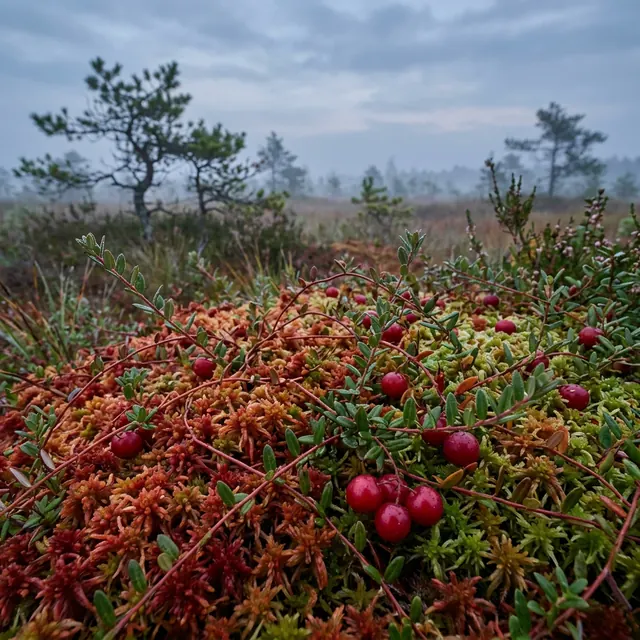
Small cranberry
Vaccinium oxycoccos
A creeping subshrub of peat bogs with thin shoots and small leaves, easy to overlook among sphagnum. In autumn it bears red, sour berries. It needs very acidic, moist soil.
How to recognise
- Shoots thin, creeping, up to 100 cm long.
- Leaves persistent, small, 8 to 10 mm, ovate, with rolled-under margins, bluish-white beneath.
- Flowers pink with petals curled back downwards, on long stalks, from June to August.
- Fruits spherical, red, up to 1 cm in diameter, sour.
Where it lives
Fairly common throughout the lowlands up to the Subcarpathian region and in the Sudetes, rarer in the Carpathians. Raised and transitional bogs, boggy pine forests.
Fruits and seeds
The fruits are edible, sour and rich in vitamin C; preserves, juices and kissels are made from them. Many peat bogs are nature reserves where picking is forbidden.
Which mushrooms grow under it
- płaskosz żurawiny (red spots on the leaves)
- Exobasidium oxycocci (cranberry shoot gall fungus)
In the past
Fruits for preserves, jellies, juices and kissels. The fruit juice is used in herbal medicine, e.g. for urinary tract conditions. Used in cosmetics.
Fun fact
It is the host plant of a protected butterfly, the cranberry blue. The Polish name does not match the Latin one, because botanists have placed the cranberry in the genus Vaccinium (blueberry).