

Spindle
Euonymus europaeus
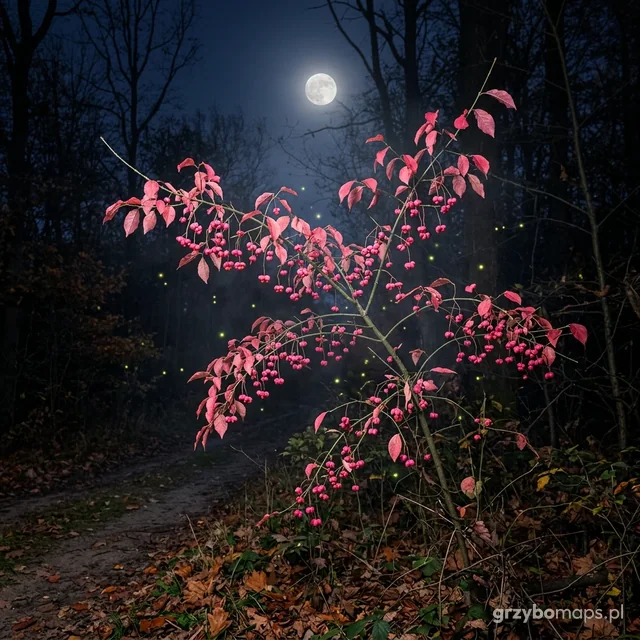
A shrub of floodplain forests, oak-hornbeam forests and thickets, most visible in autumn. Then pink capsules with orange seeds hang on it, looking like bishops' caps. The whole plant is strongly poisonous.
How to recognise
- Young shoots green, four-angled, often with narrow corky ridges.
- Leaves opposite, elliptical, finely serrated, pinkish-red in autumn.
- The fruits are pink, four-chambered capsules from which seeds in a bright orange aril emerge.
- Flowers small, greenish, inconspicuous.
Where it lives
Throughout Poland in the lowlands, in floodplain forests, oak-hornbeam forests, thickets and at forest edges.
Fruits and seeds
HIGHLY POISONOUS. The fruits and seeds contain glycosides harmful to the heart, liver and kidneys; poisoning can be fatal. Do not put them in your mouth and keep an eye on children.
In the past
The hard, even wood was used to make spindles, hence the name spindle. Drawing charcoal was made from spindle charcoal.
Fun fact
The bright seeds are eaten by robins and other birds, which are unharmed by the poison, and they spread them through the forest.