

Trees and shrubs
Black alder
Alnus glutinosa
A tree of wetlands, riverbanks and swampy alder carrs; it tolerates flooding of the roots well. In nodules on the roots live bacteria that fix nitrogen from the air and enrich the soil. Freshly cut wood quickly turns red.
How to recognise
- Bark dark grey to black, cracked into small plates on old trees.
- Leaves roundish, notched or truncated at the tip, sticky when young.
- Small woody cones that stay on the twigs through the winter.
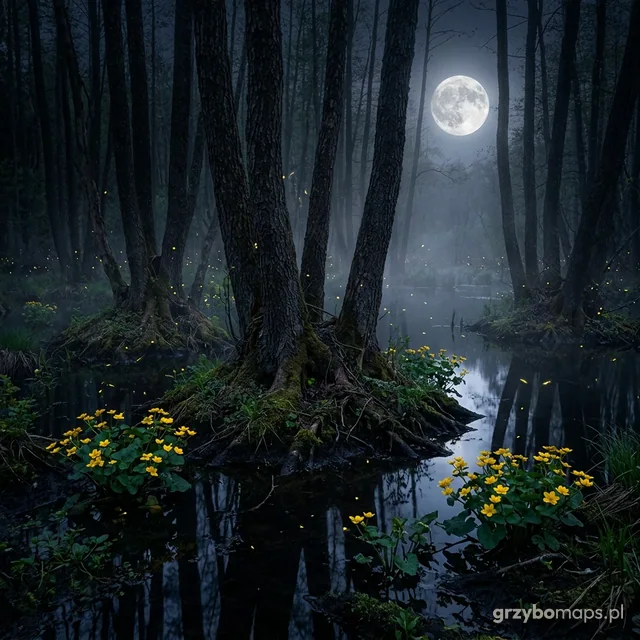
- It often grows on hummocks in water, frequently several trunks from one stool.
Where it lives
Throughout Poland, in alder carrs, floodplain forests, along rivers, lakes and ditches.
Fruits and seeds
The cones and nutlets are not edible. The seeds are eaten by siskins and other birds.
Which mushrooms grow under it
- brown roll-rim
- drobnołuszczak zielonawoszary (on wood, poisonous)
- tinder fungus (on trunks)
In the past
Wood resistant to rot under water, used for piles and wells. To this day fish and cured meats are smoked over it.
Fun fact
The root nodules of alder are formed by the actinomycete Frankia. Thanks to this cooperation, alder can grow on nitrogen-poor soils.