

Rowan (mountain ash)
Sorbus aucuparia
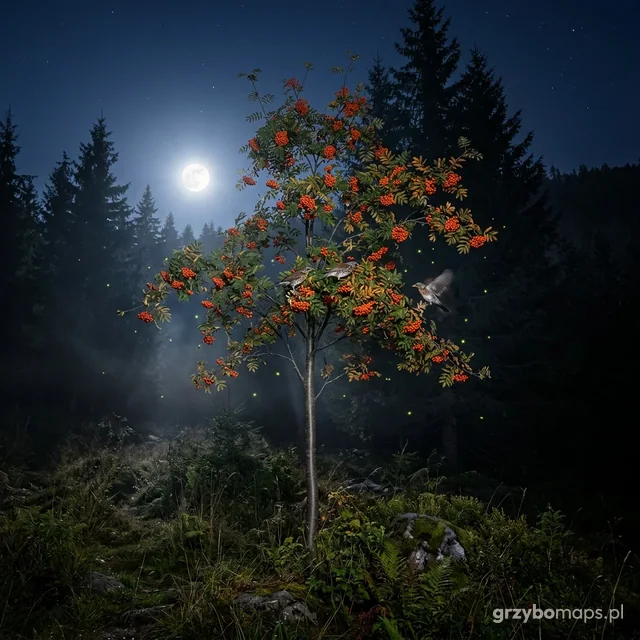
A small tree of forests, thickets and mountains, laden with red fruits in autumn. Many birds feed on the fruits and spread the seeds. It grows from the lowlands up to the upper tree line.
How to recognise
- Bark smooth, grey, glossy.
- Leaves odd-pinnate with 9 to 19 serrated leaflets.
- Flowers white in flat corymbs, fruits round, orange-red, in clusters.
- A small tree with a loose crown.
Where it lives
Throughout Poland, in pine forests, mixed forests, thickets and in the mountains.
Fruits and seeds
Raw fruits are bitter and contain parasorbic acid, which in larger amounts can cause diarrhoea and vomiting. After freezing, drying or cooking this acid breaks down, which is why the fruits are suitable for preserves. The seeds should not be eaten.
In the past
Fruits for jams and homemade liqueurs. Wood for small objects, and the trees were planted along roads.
What the beliefs say
In folk beliefs, rowan beads and twigs were meant to protect against evil and spells; in Kashubia the tree was reportedly regarded as the abode of good spirits. The rowan as a tree against witchcraft is also known in the beliefs of the peoples of northern Europe.
Fun fact
Waxwings and thrushes can strip an entire tree bare in a single day in winter.