

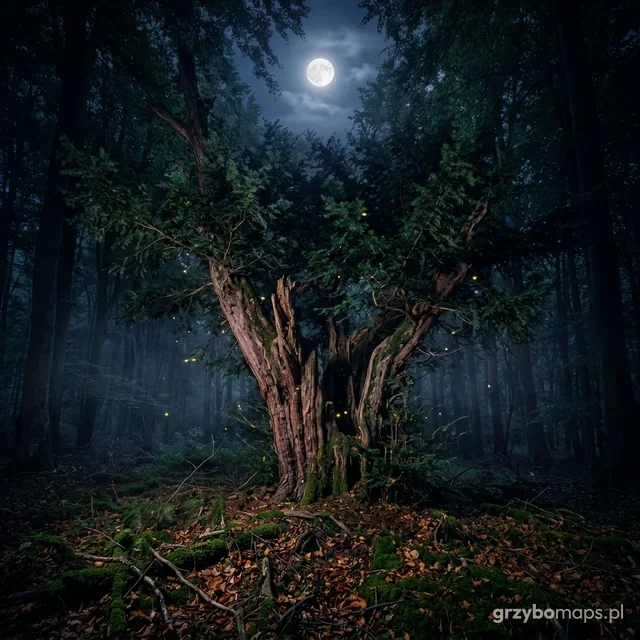
Common yew
Taxus baccata
A rare, very slow-growing and long-lived tree of shady forests. In Poland it is under species protection, and many reserves protect yews in particular. Almost the whole plant is highly poisonous.
How to recognise
- Bark thin, reddish-brown, flaking in plates.
- Needles flat, soft, dark green, without white stripes underneath, arranged in two rows.
- Instead of cones, single seeds surrounded by a red, fleshy aril (only on female plants).
- Often grows as a low tree or a multi-stemmed shrub.
Where it lives
Mainly Pomorze, the Carpathians, Sudetes and Góry Świętokrzyskie, in shady beech and mixed forests; often in parks and gardens.
Fruits and seeds
POISONOUS. The needles, bark and seeds contain taxine, which can stop the heart. The red aril looks like a berry and tempts children, but the seed inside is highly poisonous. Do not eat anything from the yew.
In the past
The hard, springy wood was used in the Middle Ages to make bows. Because of excessive felling the yew became rare.
The most famous in Poland
Cis Henrykowski in Henryków Lubański (dolnośląskie voivodeship), a natural monument since 1992.
Fun fact
Cis Henrykowski is considered the oldest tree in Poland, but its age is disputed: estimates range from about 1250 to over 1300 years, and some researchers think it is younger.