

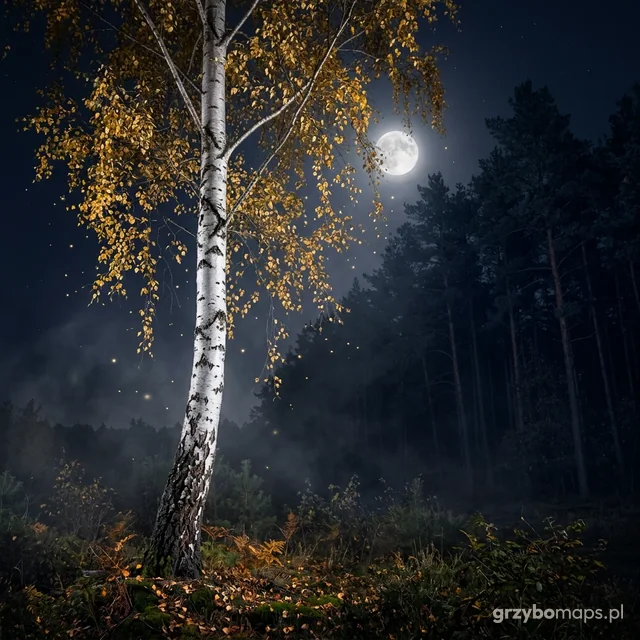
Silver birch
Betula pendula
A pioneer tree that is the first to overgrow fields, clear-cuts and burnt ground. It has white bark and a light, airy crown. It is one of the most important fungal partners in the Polish forest.
How to recognise
- Bark white, peeling in thin strips, black and deeply fissured at the base of old trees.
- Leaves triangular or rhombic, doubly serrated, on long stalks.
- Young twigs covered with tiny resin warts, drooping.
- Fruiting catkins cylindrical, breaking apart into tiny winged nutlets.
Where it lives
Throughout Poland, in pine forests, mixed forests, clear-cuts, heaths and wasteland.
Fruits and seeds
The fruits are not edible. In March and April, before the birch leafs out, you can collect sap (oskoła) from it through a thin hole that is plugged afterwards. In a state forest you need the forest district's permission for this. How to do it without harming the tree is described in the Herbal under birch sap.
Which mushrooms grow under it
- brown birch bolete
- borowik szlachetny
- fly agaric (poisonous)
- honey fungus (on trunks)
In the past
Tar was distilled from the bark and brooms were made from the twigs. The wood was used for plywood, clogs and firewood.
What the beliefs say
At Pentecost (Green Holidays) houses were decorated with green branches, most often of birch. It was believed they would protect the home from spells and ensure a good harvest.
Fun fact
The birch polypore grows on birches. Pieces of this fungus were carried by Ötzi, the Iceman, more than 5000 years ago.