

Shiitake
Lentinula edodes
Polish folk names: szitake
How to recognise
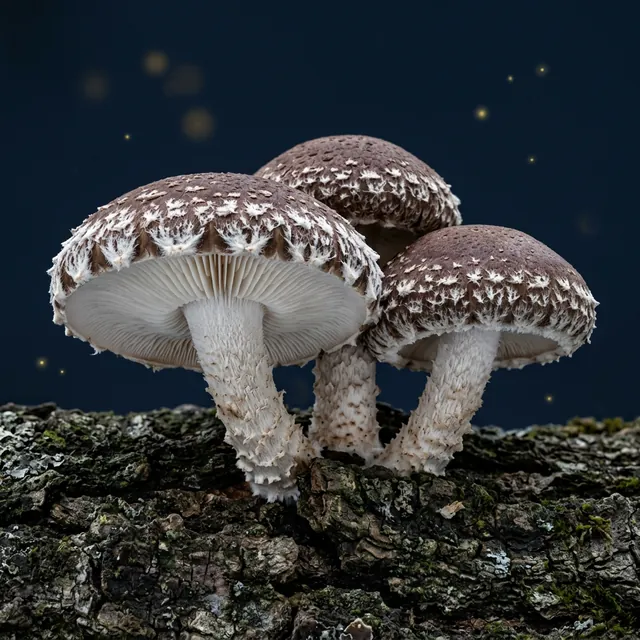
- Cap 5–15 cm, convex, dark to light brown, with white, flaky scales near the margin.
- Gills white, crowded, spotted brown in older specimens.
- Stem tough and fibrous, short, light brown.
- Flesh white, firm, strongly mushroomy smell, even stronger once dried.
Where and when it grows
It comes from Japan, China and Korea, where it grows on dead trunks of oaks, hornbeams and horse chestnuts. In Poland it is known from cultivation on logs and sawdust blocks.
JanFebMarAprMayJunJulAugSepOctNovDec
Most often under: trunks of oaks and other hardwood trees; in Poland only from cultivation.
Beware of the lookalike
Funeral bell. When growing shiitake on logs in the garden, the deadly poisonous funeral bell can grow on the wood. It is smaller, honey-brown, has a ring on the stem and rusty gills. Only pick mushrooms from the log that you know for certain.
In the kitchen
Fried, stewed, in soups and ramen. Dried, it has the strongest flavour: soak it in warm water and add the soaking water to the dish. Cook the tough stems for stock. Always heat it through thoroughly.
Good to know
Eat it only well cooked or fried. In some people, raw or undercooked shiitake causes an itchy rash in the form of whip-like streaks, which disappears after a few days or weeks. The stems are tough: best used for stock.
Frequently asked questions
Is shiitake edible?
Warunkowo. Eat it only well cooked or fried. In some people, raw or undercooked shiitake causes an itchy rash in the form of whip-like streaks, which disappears after a few days or weeks. The stems are tough: best used for stock.
Shiitake: what is it easily confused with?
Most often with the species Funeral bell. When growing shiitake on logs in the garden, the deadly poisonous funeral bell can grow on the wood. It is smaller, honey-brown, has a ring on the stem and rusty gills. Only pick mushrooms from the log that you know for certain.