

Scale of the Wawel Dragon
legenda krakowska
This is how it looks in your profile
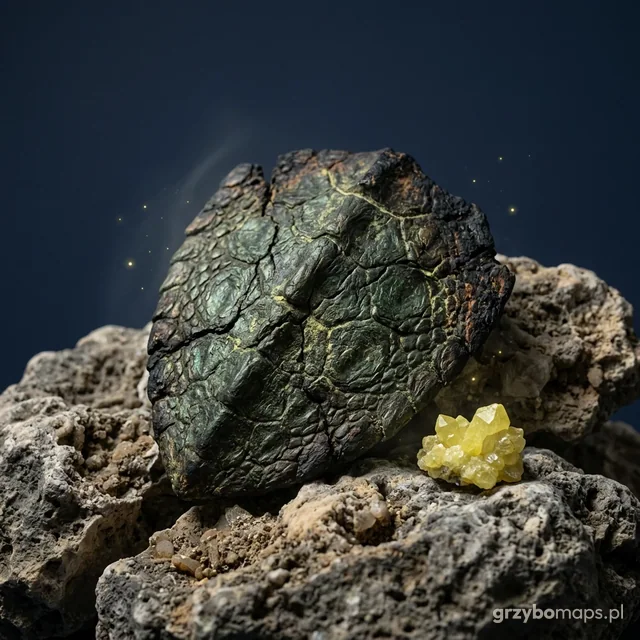
This artefact is waiting somewhere in the forest. When you find it while mushroom picking, its animated icon will light up in your Trophies, in the Artefact Display Case. Common artefact gives 5 pts in the league.
The dragon lived in a den beneath Wawel and devoured cattle, until the cobbler Skuba planted a hide stuffed with sulphur for it. According to the popular version of the legend, the dragon then drank water from the Vistula until it burst.
Origin
The oldest record of the legend comes from the “Chronicle of Poland” by Wincenty Kadłubek from the turn of the 12th and 13th centuries, where the monster is called an “all-devourer”. The figure of the shoemaker Skuba was introduced to the tale only by the “Chronicle of Poland” of Marcin and Joachim Bielski from 1597.
History
In the reign of Prince Krak, who according to legend founded the stronghold on Wawel, a terrible dragon settled in a cave under the hill. The inhabitants had to offer it cattle as a sacrifice every week, because otherwise it devoured people. This, in short, is how the tale of Wincenty Kadłubek begins.
In Kadłubek the heroes are Krak's sons. They laid out for the dragon cattle hides stuffed with burning sulphur, and the monster, having swallowed them, choked. That is not the end: the younger brother killed the elder to claim the glory for himself, and told his father that he had died fighting the dragon. When the crime came to light, he was banished. The legend of the dragon was thus originally a dark tale of fratricide.
The version known to every child was fixed by the Bielskis at the end of the 16th century. The cunning shoemaker Skuba stuffed a ram's hide with sulphur and left it beneath the Dragon's Den. The dragon devoured the bait, the sulphur began to burn its insides, so it threw itself into the Wisła and drank until it burst. The shoemaker was to receive the princess's hand as a reward, though that detail was added only by later retellings.
At the entrance to the cathedral on Wawel enormous bones have hung for centuries, which the old inhabitants of Kraków regarded as the remains of the dragon. In reality they are bones of extinct animals, probably a mammoth, a woolly rhinoceros and a whale. According to a Kraków tale, as long as they hang in their place, the cathedral is safe.
How it works
According to the legend, the dragon could not be defeated with a sword, so cunning won: the sulphur burned its insides, and the water of the Vistula did not put out the fire. In the oldest version, by Wincenty Kadłubek, the monster is killed by a trick by the sons of King Krak.
Powers
- Impenetrable armour: In the legends knights could not defeat the dragon with a sword, so only cunning won in the end.
- Fiery breath: The dragon breathed fire, and according to the popular version its insides caught fire from the sulphur.
- Insatiable hunger: Kadłubek called it an “all-devourer” because it devoured everything it was given.
- Guardian of the cave: The Dragon's Den beneath Wawel was its lair and, as the tales say, its treasury.
Fate
The dragon died, but its memory endures in the Dragon's Den, which can be visited, and in Bronisław Chromy's fire-breathing monument. In 2012 Polish palaeontologists named a predatory archosaur discovered at Lisowice the “Smok wawelski” (Wawel Dragon).
In culture
The Wawel Dragon is the hero of countless children's books, cartoons and Kraków's Great Dragon Parade. He is also the unofficial symbol of Kraków.
Fun fact
Beneath Wawel you can visit the Dragon’s Den, and in front of it, since 1972, stands a monument to the dragon by Bronisław Chromy, which breathes real fire every few minutes.