

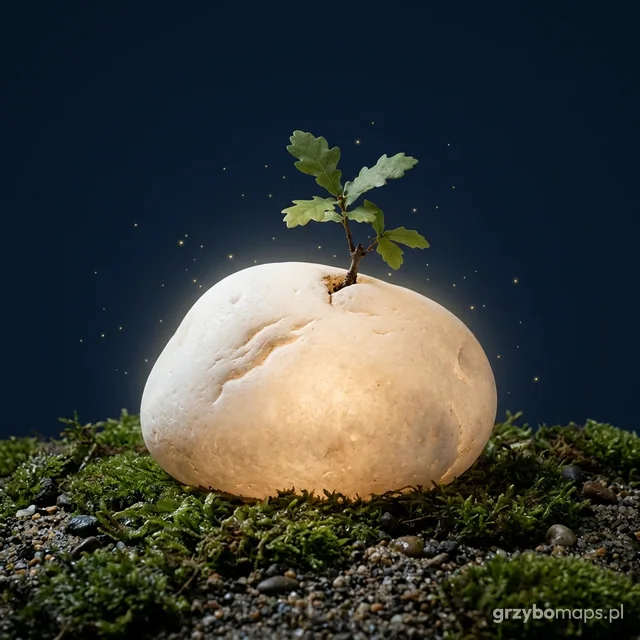
The Alatyr Stone
East Slavic folklore
This is how it looks in your profile
This artefact is waiting somewhere in the forest. When you find it while mushroom picking, its animated icon will light up in your Trophies, in the Artefact Display Case. Legendary artefact gives 50 pts in the league.
Alatyr is a sacred stone of East Slavic folklore, the “father of all stones” and the navel of the world. It lies on the wondrous island of Buyan in the middle of the sea, and the world tree grows upon it.
Origin
Alatyr is a sacred stone from East Slavic folklore, called the “father of all stones”. It is described by the “Dove Book”, a folk spiritual poem sung by wandering minstrels, and by dozens of Russian healing charms, written down mainly in the 18th and 19th centuries.
History
Far in the east, on the Ocean Sea, lies the island of Buyan, the land where the world begins. On the island rests the stone Alatyr, white and burning, of which the charms say “bel-goryuch kamen”. According to folk tradition, rivers flow from beneath it that water the whole earth, and above it rises a tree whose roots and crown join the worlds.
In the “Dove Book” the wise Tsar David answers questions about the order of the world: which tsar is above tsars, which river is the mother of rivers, which bird is the mother of birds. Of Alatyr he says that it is the father of all stones. The stone is guarded by mythical keepers: the bird Gagana with an iron beak and copper claws, and the serpent Garafena.
The healers and whisperers knew the most about Alatyr. Their charms began similarly: “On the sea, on the Ocean, on the island of Buyan lies the white burning stone Alatyr.” The healer travelled in thought across fields and sea to the stone, beside which sat a maiden or an old man, and asked them to lock the illness, haemorrhage or curse beneath the stone for ever.
The name of the stone has not been explained to this day. Some compare it with the word “altar”, others, following the linguist Oleg Trubachev, connect it with amber. This second version gives the stone a link to the Baltic, from where amber spread to Rus'.
How it works
According to the “Dove Book” and folk incantations, the stone is white and hot, hides sacred signs and has the power to heal. Healers began their incantations by travelling in thought to the east, to the island of Buyan and the Alatyr stone, in order to drive out illness with its power. The stone is guarded by the bird Gagana and the serpent Garafena.
Powers
- Navel of the world: According to belief it lies at the centre of the world, and everything begins from it.
- Source of rivers: From beneath the stone flow waters that water the whole earth.
- Healing power: Invoked in healers' charms, it locked illnesses, haemorrhages and curses beneath itself.
- Father of stones: The “Dove Book” places it above all the stones of the world.
- Guarded treasure: It is guarded by the bird Gagana and the serpent Garafena.
Fate
Alatyr exists only in songs and charms, and the island of Buyan has no place on any map. Charms bearing its name, however, were written down by ethnographers in the 19th and 20th centuries from healers who were still alive, so the tradition survived almost to our own times.
In culture
The island of Buyan was made famous by Alexander Pushkin in “The Tale of Tsar Saltan” (1831), and Rimsky-Korsakov's opera based on it carried it onto the stages of the world. The sign now called “Alatyr” is a modern symbol, not an ancient Slavic one.
Fun fact
The origin of the name is uncertain. It has been compared with the word “altar”, and the linguist Oleg Trubachev linked it with amber.